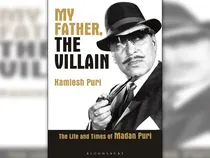
मदन पुरी. 430 से ज़्यादा फिल्में. 40 साल का ऐक्टिंग करियर. साल 1946 की फ़िल्मअहिंसा में मिला पहला रोल. ज़्यादातर विलेन के रोल मिले. कभी कभार हीरो या हिरोइन केचचा, पापा, या ताऊ या दादा. ढेर सारी पंजाबी फ़िल्में भी की. अमरीश पुरी इनके छोटेभाई. मुंबई में रहते थे. हार्ट अटैक से 1985 में में मौत. 69 साल के थे. मरने के 4साल बाद भी फिल्में रिलीज़ हुईं. आकिरी फ़िल्म 1989 में रिलीज़ हुई. पत्नी शीला देवीपुरी, इनकी मौत के कुछ साल बाद चल बसीं. तीन बेटे हैं. तीन बेटों में से एक कर्नलकमलेश पुरी ने अपने बाप पर एक किताब लिखी है. उनकी जीवनी. किताब छापने वालापब्लिशिंग हाउस है ब्लूम्सबरी पब्लिकेशन्स. किताब सिर्फ फ़िल्म ही नहीं मदन साहब कीबाकी ज़िन्दगी के बारे में भी बात करती है. 1940 और 1950 के दौर की मदन पुरी की लाइफस्टोरी बताती है. कितबा में पुरी के बम्बई में आकर एक छोटे से फ़्लैट में रहने केबारे में और अपनी फेवरिट कारपेट पे बैठ कर समय बिताने जैसी छोटी-छोटी मगर कतईइंट्रेस्टिंग बातें जमा हैं. फिल्मों में आने को लेकर उनके स्ट्रगल से लेकर उनकीशुरूआती सफलता, बिज़ी ऐक्टर बनने की कहानी तक शामिल है. इन सभी से न सिर्फ आप कुछजान पाते हैं बल्कि साथ ही इंस्पायर होते हैं.-------------------------------------------------------------------------------- बाउजी को याद करते हुए कर्नल कमलेश बताते हैं कि कैसे रणधीर कपूर को मदन पुरी नेएक बहुत ज़रूरी सीख देते हुए स्टार्स और प्रोड्यूसर के अलावा काम करने वाले सभीलोगों को आलू और प्याज़ से कम्पेयर कर दिया था. Bauji once told Randhir Kapoor,‘Movies run on the stars and the producers. The rest of the cast is onlyrequired to fill in the blanks. We are like the Aloo-Pyaaz that can be put intoany dish.’ The top guns of the film world are the stars; men and women ofexceptional beauty or great talent or great connections. Bunny Reuben in hisbook Follywood Flashback referred to them as the Beautiful People. Theyrepresent the Ideal. Despite his mournful demeanor, Humphrey Bogart became aleading man, but he repudiated the title of ‘Star’. Bogart saw a distinct dividebetween movie stars and actors. To him, stars burned bright and beautiful, butwere little more than pretty balls of gas – and he wasn’t speakingastronomically! Bauji used to give effortless performances.-------------------------------------------------------------------------------- K N Singh Saab lived in our locality and once, when I was young and brash, Isaid to him Uncle, why do you make all those frightening faces in the movies andyou never laugh the way you do at home? He gave me one of his trade marksinister looks and then smilingly said that in the era before sound in movies,villains had to appear very ‘visually sinister’, and thus many villainstereotypes were born. The villains had dens and gambling houses and molls andhordes of henchmen hanging around. These stereotypes include black clothing(often quite formal – capes, top hats, etc), facial hair, sharp features, and aperpetually ‘angry’ facial expression. There is an opposing stereotype of thesuave and polished villains like Motilal, Pran and Madan Puri who look likeheroes, but their personality and attitudes betray a diabolical nature. Anotherstereotype was villains from the rural area like Jeevan and Kanhaiya Lal.Kanhaiya Lal was a great artiste who never achieved his full potential. Hisacting in Upkaar was outstanding. His performance in Mother India would eventoday be incomparable.--------------------------------------------------------------------------------The most important of Bauji’s professional ethics entailed that seniors receivedue respect. He cited the Kapoor family as a shining example of correctprotocol. Bauji practiced what he preached. Our grandfather passed away in 1976at the age of ninety-three. The day after the rituals, Bauji suggested thatChaman tayaji and Amrish chachaji should go to work, and he would do the same.He said, ‘The loss is ours, why should the producer suffer?’ On one occasionBauji was told that a popular but arrogant hero was bad-mouthing him. Baujiasked the actor if the story was true, and if so would he like to apologize sothe matter could be closed. The actor repeated his words with even morearrogance. Bauji publicly slapped the actor, who then threatened police andlegal action. However, all those present told the hero that he was at fault andnobody would give evidence against Madanji. He was advised to apologize, whichhe finally did, and the matter was closed.-------------------------------------------------------------------------------- Ramnesh was witness to one of his principles. Bauji was sitting on his carpet,shaving, when a producer and his director came to meet him with a movie offer.After some discussion Bauji quoted a very high figure. They said that they wouldrevert, and left. An hour later another producer walked in and surprisingly,Bauji told him that he would accept whatever was offered. The producer quoted asmall sum and then left some money as a signing amount. Ramnesh asked why therewas such a disparity between the two quotes. Bauji said that the producer hadbeen in the industry for a long time but did not have much finance, so Bauji wasprepared to work for him at any price. A few days later they had a mahurat atEssel Studios. Bauji spent the entire signing amount on arranging drinks anddinner for the unit. Sadly, the movie was never completed. As for the otherproducer, Bauji did not wish to be associated with him.-------------------------------------------------------------------------------- Once in the early sixties we were sitting on the carpet, when a gentlemanwalked in. After a few pleasantries, he asked Bauji for a loan of a fewthousands. I got up to leave the room, but Bauji signaled me to sit down. Baujigave him 500 rupees, and told him that this was the last time that he should askfor money as he had never returned previous loans. Later, Bauji told me that thevisitor used be a great star but had squandered all his money. Because of hisprofligate habits he had no work and was reduced to begging. Bauji alwaysadvised that one should never take a loan (he never took a loan in all hislife), and if you need to give one, off er a small amount and then mentallywrite it off as a gift. If you demand it back, then invariably you have lostyour money as well as a friend.--------------------------------------------------------------------------------When Aradhana was almost complete, Burman Dada decided to add another song,Safal hogi teri aradhana, and he planned to sing it himself. One of ShaktiSaab’s greatest qualities was his willingness to listen to advice and thendecide for himself. The song was being composed at Burman Dada’s house; Ramneshas an Assistant Director was present because Shakti Saab wanted some changes inthe tune. Bauji was a good friend of Burman Dada. He had asked Bauji to drop into provide some moral support. Burman Dada sang and Bauji exclaimed, ‘Wah!’ Dadainstantly stopped singing and asked, ‘Who said Wah?’ Everybody was taken aback,thinking that Dada was offended. But Dada gave a big smile and told Shakti Saab,‘Agar yeh Aurangzeb ko bhi gana acha laga to Saab yeh tune change nahin hoga…aare yeh Puri Saab jo sa re ga nahin gaa sakta hai, usne prove kiya ki woh apnakaan se music samajta hai…’ Burman Dada did not change the tune and the song wasrecorded the very next day.--------------------------------------------------------------------------------Madan Puri had a vast histrionic range, he coached himself by observing people.I recollect one particular incident in the late sixties, when we had a death inthe family and we were all heartbroken. I did not wish to display my emotions soI went to the side of the hospital building and wept some silent tears. Baujinoticed my absence and came looking for me. That memory stayed in his mind, andhe used it to telling eff ect in Yash Chopra’s Noorie. His daughter is piningfor her lover and he cannot bear to see her sorrow, so he goes to the side ofthe hut and weeps piteously. Whenever he visited my army stations he would watchmy colleagues and me and carry some of the mannerisms back in his mind.--------------------------------------------------------------------------------